
By Kathy Warnes
One of America's bravest war heroes never fired a shot at the enemy that he helped conquer. His picture doesn't stare from the history books and he doesn't lie in Arlington National Cemetery. But Private John Kissinger of Huntington, Indiana, made an invaluable contribution to American health.
In the words of his commanding officer, Major Walter Reed, "In my opinion his exhibition of moral courage has never been surpassed in the annals of the Army of the United States."
In the year 1900, Major Walter Reed was prominent among the group of surgeons battling to wipe the scourge of yellow fever from the earth.
In the year 1900, John Kissinger was a farm boy in Huntington, Indiana, and at 19, a private in the Indiana militia. With his unit, he succeeded in getting within a day's sailing distance of Cuba. Before he could get in the front lines, the Rough Riders marched up San Juan Hill and the Spanish American War was over. He went home without seeing the enemy or firing a shot.
One hour after he got home, John enlisted in the regular army, hoping to be sent to the Philippines where there was "real action." But one of his toes was defective and the Army was strict about letting anyone with defective toes fight. John was allowed to transfer to the Hospital Corps and the Army marked him for Foreign Service.
This turn of events suited Private Kissinger until he discovered that foreign service didn't mean in the Philippines, but right on America's doorstep in Cuba. John arrived in Cuba, disappointed, but willing to cooperate.
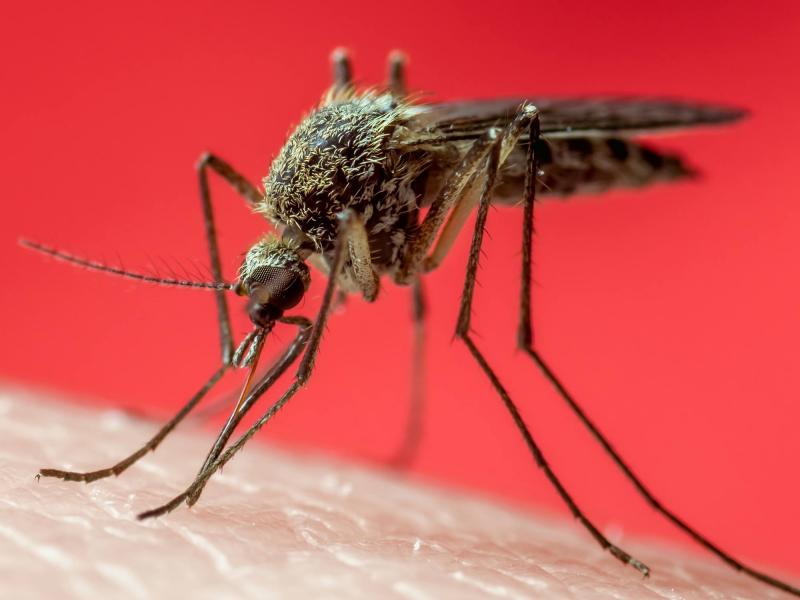
At this time in American history, the United States Army was busy cleaning up Cuba, which was torn by war and ravaged by pestilence. The campaign was more of a sanitary mission than a war, and the real enemy was yellow fever, which had killed more men than Spanish bullets. Army physicians including Walter Reed, Jesse W. Lazear, James Carroll and Aristides Agramonte, had developed certain theories about yellow fever. They were convinced that its deadly germs were carried by a certain kind of mosquito that infected humans. If the doctors could prove this, killing the mosquitoes could control the disease.
Dr. Lazear was the first to make the test. He allowed himself to be bitten by a germ-carrying mosquito. He contracted yellow fever and died. Dr. Carroll got the fever the same way and became deathly ill. Eventually, he recovered.
While he was going about his duties as a hospital orderly, Private Kissinger overheard several doctors talking. "What we need is to experiment on a human being," they said. All that night, Private Kissinger thought about the conversation he had overheard. This might be a way to demonstrate his bravery, he thought, since he hadn't had the opportunity to prove his bravery under fire.
The next morning Private Kissinger went to see Dr. Reed. "Yesterday, I heard you say that you needed somebody to use for your experiment. I'd like to volunteer," Kissinger said.
Dr. Reed was surprised. "Do you realize what this test may mean?
"Yes, I do, but I'm ready to try it, sir."
Private Kissinger obtained the permission of his commanding officer, then he came back to Dr. Reed.
"I'm ready, sir."
"Sir, I salute you!" Dr. Reed exclaimed.
Seven days later, Private Kissinger lay on a hospital bed, racked with pain and burning with fever. The inoculation by mosquitoes had "taken." In the eight days of Private Kissinger's illness, the doctors learned more by studying him than they had discovered in eight years of experimentation.
Then, as far as Private Kissinger and the doctors knew, he recovered. He was registered as "immune from yellow fever by previous attack," and sent out to continue working as a hospital orderly. Utilizing the data they learned from Private Kissinger, the doctors waged a sanitation war. Cuba was freed from the yellow fever mosquito and the soldiers came home.
Private Kissinger took his honorable discharge and settled down again to life on an Indiana farm. But he wasn't as well as he had been when he went to war. His legs sometimes gave way under him and he was weak and dizzy. Not strong enough to continue farming, he tried working in factories and restaurants. Naturally America was grateful to him, but Congress ruled that he wasn't entitled to a pension. The first attempts of his friends to impress Congress with his service to his country failed.
One day John fell to his knees and couldn't get up. Spinal myelitis, brought on by the yellow fever, had paralyzed his legs. It would be thirteen years before he would walk again. This turn of events also ended his work in the box factory. John got around on kneepads made for him by a kindly leather worker and he and his wife took in washings. His wife added to the family income by scrubbing floors.
A few years later, Congress relented and granted John a pension of $12.00 a month. Later another Congress took even this small pension away. When things looked darkest, friends came to John's rescue, among them noted physicians from New York and Baltimore who realized the courageous sacrifice that he had made for his country. They loaned him enough money to keep alive and finally succeeded in getting Congressional approval of a $100 a month pension.
Through the American Association for Medical Progress, these same friends spearheaded a fund drive that raised $6,000 to buy a home for John and his wife. Hundreds of dollars were contributed by sympathetic school children and by South American women who fully realized the horrors of yellow fever. There was enough money to buy a cow, which John desired more than anything else.
John and his wife named the little cottage paid for by the fund drive, "Dream House," and he fashioned a wooden, brightly-painted Uncle Sam and fastened it to his mailbox with his own hands.
After about 13 years, John gradually regained the use of his legs. He taught himself to stand again and to walk after a fashion. He had to be careful not to over do, because there was no guarantee that his old trouble wouldn't return quickly as a mosquito. John had 13 years worth of back bills to pay and he wore second hand clothes for the rest of his life. But his spirit wasn't second hand.
"I'm grateful things are looking better," he said.
Published U.S. Legacies December 2003
- Log in to post comments