
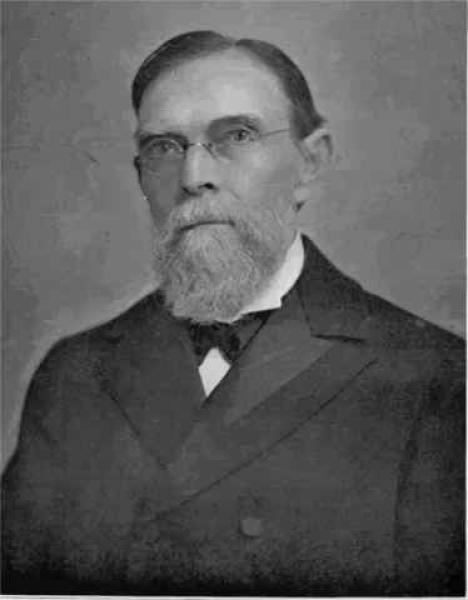
G.W. Claiborne
from Petersburg Virginia
Hello! This is a very interesting site, I was wondering if you could help me, I am researching a Civil War soldier from Petersburg Virginia, by the name of G.W. Claiborne, The G might be Gregory, but I am not sure. Any information would be very much appreciated. Thank you!
Bill Miller
Reply
We know of a John Herbert Claiborne, 1828-1905, who states that he was part of the Fourth Virginia Battalion, made up exclusively of Petersburg, VA troops and had a brother named G. W. Claiborne who also served with him in that unit and later became an assistant surgeon in the Navy. We could not find any data on the name of G.W. Claiborne, however John Claiborne was born in Brunswick County, Virginia, on the 10th of March, 1828 and was the oldest male in the family.
His grandfather was Captain John Herbert Claiborne, who was a member of the Surry Troop, a company of young gentlemen who armed and equipped themselves and fought without pay in the famed legion of Light Horse Harry Lee, the father of Gen. Robert E. Lee.
In 1840 or 1841 young relatives of John Herbert Claiborne, named S. Josephine Claiborne and her brother John R. Claiborne, having lost their father and mother, were adopted into John Herbert’s fathers family. They were the children of Dr. Jas. B. Claiborne, of Brunswick County. Dr. Claiborne married John Herbert’s mother’s sister, Jane Weldon, of Roanoke.
PERSONAL ANCESTRY
of John Herbert Claiborne
Editors’s note: The following Claiborne memoirs are excerpted from a collection of historical writings stored at the Library of Congress. He was a Senator of the state of Virginia when the Civil War broke out, so there is quite a bit of documentation about him.
As these are personal memoirs, I will here note that my mother, Mary Elizabeth Weldon, was born in Blandford and baptized in Old Blandford Church. She was the daughter of Daniel Weldon, of Weldon, on the Roanoke, North Carolina, and of Mrs. Mary Donald Weldon, nee Fraser.
Mrs. Weldon, her mother, was the daughter of Simon Fraser, of the first of Donald and Fraser (the latter a younger son of Simon Fraser, Lord Lovatt of Scotland), Scotch merchants in Blandford. She married, when very young, one of the Randolph’s of Curls Neck on James River, by whom she had one child, John Randolph, who died soon after coming of age. On the death of Mr. Randolph, who lived only a few years more, she married my grandfather, Mr. Weldon, of North Carolina, by whom she had two daughters: one, my mother (just alluded to), and the other, Jane Weldon, who married Dr. James B. Claiborne, of Brunswick County, Virginia.
My grandfather Weldon only lived a few years after this marriage, and my grandmother married a third time. Her third husband was Dr. Blunt, of Belle View, Southampton County, Virginia, by whom she had four sons and three daughters. One of these sons, Simon Blunt, displayed such courage in a fight with the negroes during Nat. Turners insurrection (1832) that, though only a lad of 12 years of age, General Jackson, then President of the United States, made him a midshipman in the Navy.
Another son, and the oldest, William Blunt, my mothers half brother, was notified in 1846 or 1847 that he was heir to the title and estates of Lord Lovatt, of Beaufort Castle, in Invernesshire, Scotland. He declined both title and estates, however, and I have recently heard that the matter was in contention for 20 years afterwards. But I suppose that another heir was finally found, as I have learned through the same source that a general officer in the British Army in South Africa is Simon Fraser, General Lord Lovatt, who, I presume, is one of my illustrious, though unknown, kin. I can only wish that, if there be such a person, he were fighting in a better cause than striving to subdue a brave people contending for the inalienable rights of home and country. But if he really represents that sturdy stock of Highlanders from which I am proud to draw my lineage on my mothers side, I am sure that, in the place of General Lord Roberts, it would hardly have taken him two years and more to reduce with two hundred thousand troops twenty thousand Boers.
I have made no reference to my father in this generalized diversion, though he was born in the vicinage of Petersburg, and his dust, with the dust of my dead for nearly two centuries past, sleeps in the hallowed old cemetery of Blandford Church.
The annals of the Claiborne family are well known to all who take an interest in them. I will only say that William Claiborne, of Kents Island, who, from 1621 to 1647 and later, played no unimportant part in the history of Virginia and Maryland, was the ancestor of all people of that name in this country.
He was called at one time Claiborne the Rebel, and his name was clouded by one or two historians; but Charles Campbell (History of Virginia) and John Fiske (Old Virginia and her Neighbors) have happily cleared his name and established his well-earned fame.
Rev. Philip Slaughter, in History of Bristol Parish, says that his character has been gracefully summed up by a gifted biographer, Rev. S. F. Streeter, of Baltimore. Mr. Streeter says, the hand of prejudice, prompted by personal subservience, traced on the tablet of History an inscription as unjust to the character and actions of the deceased, as unbecoming the dignity of the historic muse. It has been reserved for an humble inquirer, and a lover of the truth, to erect a new cenotaph, which displays the name of Claiborne as worthy of honor and respect; and which ranks him who planted it in this country as a man of whom his descendants have every reason to be proud. One of the earliest pioneers of civilization, the first actual settler of the territory of Maryland, and among the most active and prominent citizens in the early days of Virginia, and one of the most remarkable men of his time.
The section of the country in which I was born was known as The Red Oak Neighborhood. This was about fifteen miles north of Lawrenceville, the county seat, and was distinguished as a locality for the wealth, culture, refinement, and hospitality of the families, who occupied it. They were literally the F. F. Vsa term which had not been used up to that time as a covert sneer, and, as it has been so often used since, to decry a race of men whom their critics would have us, of this day, believe were a pretentious and bloated aristocracy, resting their claims to eminence upon ancestral merit. They were large slaveholders, owning large plantations, which had been their heritage for years, and which gave, with guaranteed wealth, a leisure that furnished opportunity for culture, a culture that insured refinement and made the gentleman. The owning of slaves established and cultivated the habit of command, and fitted the master to leadas the Southern man did ever leadin society, in politics, and in war.
The F. F. Vs, descendants of the cavalier elements that settled that State and wrested it from the savage by their prowess, introduced a leaven in the body politic, which not only bred a high order of civilization at home, but spread throughout the Southern and Western States, as the Virginian, moved by love of adventure or desire of preferment, migrated into the new and adjoining territories.
Until nine years of age I lived on my fathers plantation the life of a Virginia boy, roving, hunting, fishing, riding, driving cattle always followed by two or three negro boys of about the same age, my satellites and companions, partners in any mischief, and with whom I cheerfully divided any good fortune which came to me in the way of cakes, fruit, or other edibles.
Thus was established that good feeling and mutual trust which characterized the relationship of master and slave. The negro of that day was proud of his master, devoted to his interests, and would lay down his life for him or his family.
John Herbert Claiborne
Published in U S Legacies Magazine April 2003
- Log in to post comments