
Surname Requests
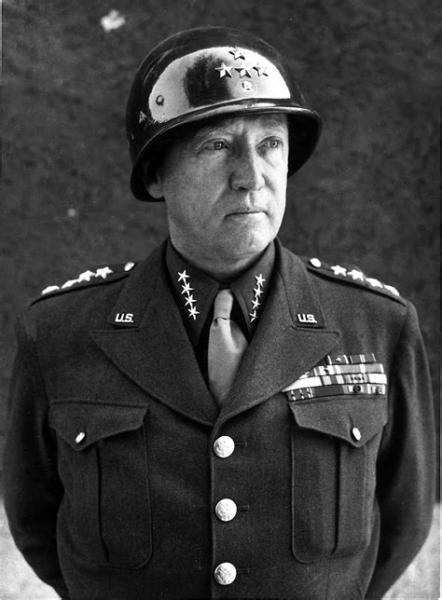
General George Patton
Family Genealogy
Dear U.S. Legacies,
My mothers maiden name is Margie Nell Patton. She is in her late 70s. She is looking for some genealogy material for General George Patton that might yield this info. Can you point us in the right direction please?
Thanks for your time,
Glen
Response
General George S. Patton’s family:
Parents: George Smith Patton Jr and Ruth Wilson.
Grandparents: George Smith Patton and Sue Glassel
Great-grandparents: John M. Patton and Peggy French Williams
That is the ancestry of Patton back to his great-grandfather...his great grandmother, Peggy Williams, parents were Isaac Hite Williams and Lucy Slaughter. Isaac was descended from the Hites who settled the western part of VA.
Volunteer
Response
Editors note: We extend our thanks to the anonymous guest who supplied us with the following wonderful information:
General George S. Patton, Jr., had many reasons to be a great military leader. Patton had a long heritage of greatness. His father had lived through the Civil War and had vivid memories of the Confederacy. In the Patton home, there were many mementos of the Civil War, from steel engravings of General Lee and Stonewall Jackson to the shell fragment that was taken from the lifeless body of the first George Patton. In a recent interview, Patton’s daughter, Ruth Ellen Patton Totten recalls, “Until he was 15 years old, my father thought those steel engravings were of God and Jesus Christ.”
One of the senior Patton’s best friends was Colonel John Mosby, the fabled Grey Ghost of J.E.B. Stuart’s legendary cavalry. During visits to the Patton Ranch in Southern California, Colonel Mosby would re-enact the Civil War with George Junior; playing himself, he let George play the part of General Lee as they would recount the battles of the war, astride their horses.
Although young George was named Junior, he was actually the third to bear the name George Smith Patton. The first Patton was killed in the Civil War at the Battle of Winchester at the age of 26. He was commanding the 22nd Virginia Regiment in the Shenandoah Valley. Walter Taswell Patton, a brother of the first George Patton was killed at Gettysburg while leading a regiment under the command of Major General George E. Pickett. These brothers were two of eight sons of John Mercer Patton. Six of those eight sons fought for the Confederate States of America. The other two remained at home only because they were not yet in their teens.
The Patton family origins have been traced to 18th- century Scotland. They go back to a mysterious event that forced a young man to flee his native town of Aberdeen, Scotland, making his way to Fredericksburg, Virginia, during the Revolutionary turmoil of the 1770s. The young mans real name was wiped from the records upon his departure from Scotland. He probably had reason to obscure it to prevent the authorities from tracking him down in the New World. He traveled under the assumed name of Robert Patton. He became rich and respectable in the Colonies and married Anna Gordon Mercer, the only daughter of Dr. Hugh Mercer, a physician who served as an Army Surgeon with Colonel George Washington in the Braddock Expedition against Fort Duquesne in 1756. General Mercer later was Surgeon-General in the Revolutionary War of Independence.
Robert Patton and Anna Mercer Patton bore John Mercer Patton. John Patton married Margaret French Williams. One of the sons of John and Margaret was the first George Smith Patton.
It has been claimed by some of the Patton family that the family roots have been traced as far back in history as to include sixteen of the original signers of the Magna Carta. There is also a branch of the family that is related to George Washington by way of his uncle, John Washington.
The first George Patton was buried as a Brigadier General and was survived by his wife, two sons, and one daughter. She later remarried, to a Colonel George H. Smith. Colonel Smith and his newly acquired family set out for California shortly after the Civil War was ended.
In California, there was a man known as Don Benito Wilson. His real name was Benjamin Davis Wilson and he was one of the earliest pioneers in the Mexican territory of Alto California. Wilson, an ex-Tennessean, had operated his own trading post when only 15 years of age, trading with Choctaws and Chickasaws near Vicksburg, Mississippi.
Later he was a trapper for the Rocky Mountain Fur Company and during that time had been captured by and escaped from Apaches in New Mexico. He had survived a wound inflicted by a poison arrow from a band of marauding California Indians, and he decided to settle in California when he arrived there in 1841. He had originally planned on going to China, but when he arrived in the village of Los Angeles, there was no ship, so he stayed where he was.
Wilson was highly respected in California. Aside from being wealthy and being in the aristocracy, he was widely known as a savage fighter. He was not a man to cross. He once returned from a raid against some hostile Indians carrying baskets filled with heads of the enemy.
There is a story told about Don Benito loaning $5000 to Colonel Claus Spreckles, the Sugar Baron of San Diego. Wilson, being a man of honor, asked only a handshake to seal the bargain, in lieu of a promissory note. When Wilson later requested payment of the loan, he was told that since he had no legal paper requiring re-payment of the debt, he would not be repaid. He then buckled his gun belt around his waist, entered the office of Spreckles and asked Spreckles secretary if he had ever seen a man die. When the man said, No, Wilson said, Young man, you have never watched death? Well, then, wait about one minute. There was no death that day, but the debt was quickly paid, and in cash.
It was Wilson who was responsible for the start of the citrus industry in California. He also experimented with the farming of sugar cane and he planted some of the first vineyards for fine wines. He was an Indian agent who was among the first to advocate rights for the displaced Indian, feeling strongly that it was the Indian who needed protection from the White Man rather than vice-versa. He was Alcalde of Pueblo de Nuestra Senora la Reine de los Angeles de Parciuncula when it was Mexican, and then Mayor of Los Angeles when it became United States territory, and served three terms as a California State Senator. Contrary to the popular opinion of most people that Mount Wilson in California was named after President Wilson, it was actually named in honor of Benjamin D. Wilson after his death. It was Wilson who made the first trek up the mountain and built a usable road around its slopes.
After Wilson had settled in California, he had married Romona Yorba, the daughter of Don Bernardo Yorba, a prominent Mexican Don and ranchero. Romona later died, and Wilson married Margaret S. Hereford of Los Angeles. It was a daughter from that union, Ruth Wilson, who married George Patton, the son of the Civil War commander.
George and Ruth bore George Smith Patton, Jr., the future Commanding General of the Third Army. He was born on November 11, 1885. Patton was reared on his fathers ranch, learning how to deal with nature. He learned to hunt, to fish, to sail, and to be a skilled horseman during the years when other children were learning to read from a McGuffys Reader. Recently, there has been much reference to and speculation concerning, the fact that Patton did not begin his formal education until the age of 11.
It has been claimed that his parents kept him out of school because he suffered from a disorder known today as dyslexia, which is a motor dysfunction between the eye and the brain, causing a transposition of letters when reading or writing. Such a disability makes learning to read and write much more difficult than normal. There is truthfully no way of proving that claim, though. Although Patton was a terrible speller throughout his lifetime, he did not show any signs of a writing problem caused by dyslexia. Even if the claim of dyslexia is true, it only adds to the admiration that should be felt for Patton.
To overcome such a handicap and to complete the rigorous depth of study that he accomplished would have been in itself a marvelous feat of sheer willpower. At the time of his death, Patton had one of the most comprehensive military libraries in a private collection. It rivaled even the collections of military institutions. Additionally, each volume was not just read, it was studied. Virtually all of the volumes in his library had notes and remarks in the margins throughout the book. One such volume that Patton especially liked, which was written by one of his favorites, General J.F.C. Fuller, not only had profuse marginal notes; Patton later formalized some notes on the book which turned out to be seven typewritten, single spaced pages. There is, however, one view that makes the dyslexia claim somewhat suspect. In his autobiography of General Patton, General Harry H. Semmes, a long-time friend of Patton, states:
“His fathers theory of education consisted almost entirely of the child being read to by his elders. It was founded on the belief that the youthful mind should be led along a path that parallels the development of the mind of the race. The books should be read aloud to the child until his early teens, because his ability to absorb by ear is far greater than his ability to read, and the rhythm and beauty of sound added a great deal to the pleasure. Under this theory of education, the child would find his proper channel, his true interest.”
Young George never cared greatly for any of this program except the legends, the epics, and heroics. He found there his true interest. At the age of seven, he could repeat whole pages of Pope’s translation of The Iliad. Further evidence is that Patton’s sister was educated in the same manner as was the future general. It is doubtful that both she and her brother would suffer from the same disorder. At any rate, it must have been an interesting situation at Stephen Cutter Clark’s Classical School for Boys in Pasadena when Patton was initially enrolled for classes. Though he could neither read nor write, he could quote long passages out of works that other students had not yet read, but there his capabilities ended. He was at home in the world of great ideas, but at first he could not turn out a theme or cope with arithmetic.
From Clark’s school, Patton went to Pasadena High School and upon graduation; he spent a year at the Virginia Military Institute in preparation for West Point. The Senior Patton had himself been a graduate of VMI.
Patton took five years to graduate from West Point due to the fact that he failed a French examination by a fraction of a point. By some obscure technicality, the failure in French necessitated an additional test in mathematics. He passed the French examination, his original stumbling block, but failed the second mathematics examination, again by a fraction of a point. Luckily, he had shown abilities in other areas. In addition to his exemplary military deportment he had displayed great desire. He was allowed to re-enter West Point, and to repeat his plebe year. While at West Point, he broke both of his arms while playing football, but won his coveted Army letter by breaking a record in a track event, the 220-yard low hurdles.
A phenomenon among historians is the ability to capsulate a persons life. Patton has been the subject of many first rate biographies and many others which are less than good. His whole WWII career has been portrayed in a two-hour motion picture. His entire life and military career has been the subject of some 30-minute documentaries. Even this book suffers from the disease of time and space. For that reason, quite often Patton is remembered as the general who slapped a soldier or a tank general in WWII, thereby encompassing his whole life and career of 60 years into a single phrase or sentence.
Patton certainly did more than just serve in WWII or slap a nervous soldier.
His first post was Fort Sheridan, Illinois, when the cavalry was still glamorous. He was the Army’s first Master of the Sword, a position which required him to rewrite the cavalry training regulations for the Army. He redesigned the Army’s cavalry saber in 1913, changing it from what he called a curved hacking tool into a straight-blade attack weapon.
While stationed at Fort Sheridan, Patton acquired his first nickname, Saber George.
In 1912, Patton placed fourth in the Military Olympics at Stockholm, Sweden. Out of five events, he placed second in swimming; third in cross-country riding; first in fencing by handing the French champion his only defeat; and he finished 27th in pistol shooting. Had it not been for the poor showing in the pistol competition, he probably would have finished first in the pentathlon instead of fifth as he did. The probable reason for his poor score in pistol shooting is the gun he used. Because the events in which he competed were a military pentathlon, Patton insisted on using a regulation military firearm, a .38 caliber revolver. There were no requirements as to what pistol had to be used and the other entrants chose to use .22 caliber weapons. In the previous days practice, Patton had set a world record. On the day of the actual competition, Patton shot almost all tens and two nines. The problem arose when the judges called a complete miss. Due to the .38 caliber bullets he was firing, Patton had almost torn out the center bulls-eye with his scores of 10. What must have happened was that a bullet had gone through the torn area without leaving a complete hole for the judges to witness. Even his competitors admitted this to be so, but there weren’t available then the exacting measuring devices as we have now and the judges could only score the firing as they saw it; a miss, as difficult as it was to believe.
After WWII, Patton took a short leave and visited Sweden where he met with some of his old competitors. During a re-match, he scored much higher than he had in 1912. After the 1912 Olympics, Patton returned home, waiting for a good war.
He went to Mexico in 1916 with General Pershing and ushered in the age of motorized warfare while killing three of Franciso Pancho Villas bandit followers.
He served in WWI initially on Pershings staff and then he almost single-handedly created the American Tank Corps. In WWI combat he was severely wounded and almost died from blood loss. For his performance during the Great War he received the Distinguished Service Cross, the Distinguished Service Medal, and the Purple Heart.
The passive years between WWI and WWII were spent in unceasing military study, polo playing, and tank study. In 1932 he commanded troops at the Bonus War in Washington, which finally killed him after he had been paralyzed in an automobile accident in 1945.
He was awarded the Congressional Lifesaving Medal for saving the lives of three boys off the coast of Salem Bay, Massachusetts. The boys had overturned their small boat during a heavy squall and while Beatrice sailed the Patton’s sloop, tacking back and forth, George swam back and forth three times through the choppy waters towing the boys to safety.
Patton was not just a remarkable man; he was a remarkable man who had lived his life to its fullest. His was a life filled to the brim with excitement, adventure, and danger; he enjoyed it all. In the words of Kipling, he had, ... filled the unforgiving minute with 60 seconds worth of distance run.
Guest
Published in U S Legacies Magazine May 2003
- Log in to post comments