
Contributed By Dale Castle
I grew up in the Sheffield area of Northeast Kansas City in the late 1950s, but spent a good part of each summer vacation at my grandparent’s house just south of Amoret, Mo.
They lived about three miles south of town. The Marais des Cygnes river was on the east side of their property and a stand of deep timber on the west side. Rich bottom land made up the other two sides of the property. A long winding road made from crushed river rock led to the old house.
The family dog, King, always met us halfway down the road. He had a huge tail that could bring tears if it hit you in the leg, and one swipe could clean off an entire coffee table when he was excited. King was your typical big farm dog that could whip his weight in wildcats, but was very protective and gentle with children.
The house was surrounded by many shade trees – some oaks, a few maples, but mostly walnuts. Grandma told me that she planted walnut trees because they were the last trees to grow their leaves in the spring, which would allow the sun to help warm the house, and they were the first to lose their leaves in the fall, which would also help warm the house.
A vegetable garden ran from the house to the barn, and behind the barn was the outhouse. Not to bad of a walk during the day, but a very long and scary trek for a kid in the middle of the night. Seems like there was always a hoot owl close by that would scream out just as you got halfway down the path.
My grandfather’s hobby was tending to bees. There were probably ten working hives in the far corner of their three-acre yard. I was never allowed to get within a hundred yards of the hives, but they were close enough that I could watch my grandfather using a smoker to calm the bees so he could get to the honey. Even though he wore protective gear, I though he had to be the bravest man in the world to walk around the hives with thousands of bees swarming around him. It was very impressive to an eight-year-old boy.
Down each side of the house is where all the herbs were planted. My grandmother knew a great deal about them and how to use them for just about anything that ails a person. She grew a lot of mint with the herbs for her tea which was the best I have ever had.
A short walk through the pasture across the road from the house would take me to an old apple orchard that no one cared for anymore. I could always find a few apples though and would take them about a block down the gravel road to another pasture that was the home to a couple of broken down old horses. They came to expect me every day and I rarely disappointed them. If I was lucky, I would find a box turtle on the way back that I would keep as a pet until my grandmother would find out and make me turn it loose.
Some of my fondest memories as a child were helping my grandmother in her garden. That woman forgot more than I will ever know about raising a garden. My sisters and I would sit on the front porch and help her snap beans and shell peas for hours in the evenings. It was great listening to the cicadas and birds wrapping up the day with their songs as we worked. By fall, the root cellar was brimming with brightly colored jars of vegetables from her garden.
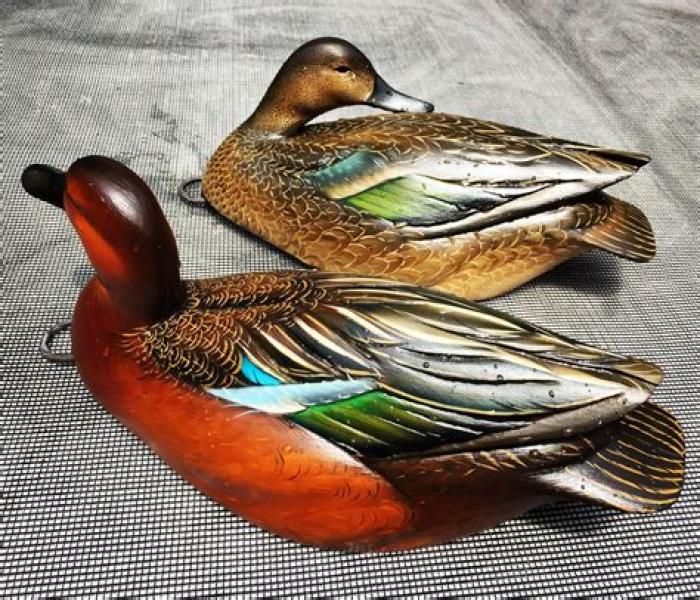
Grandma had her garden, but Grandpa’s passion was found in his basement workshop. It was a wonderful place to visit. Grandpa carved a lot of objects from wood but his forte was wooden duck decoys. Each one was placed high up on shelves when they were completed. They were absolutely beautiful and very realistic, right down to the color of the paint. People came from as far away as Kansas City to admire and buy his decoys.
In addition to the house not having indoor plumbing, there wasn’t any electricity or gas. Heat was provided by a huge pot-belly stove in the living room that had to be fed huge amounts of coal and wood. The wood-burning cook stove must have been very difficult to cook on, but my grandmother never appeared to have a problem with it. Some of the best meals I’ve ever had in my life were cooked on that stove. Water for cooking, cleaning and bathing had to be brought in from the well in the backyard, a bucket at a time, and heated on the stove. A large round wooden bathtub was kept on the enclosed back porch. The same water was used by everyone. The men bathed first, followed by the women and the children. Because of the difficulty of getting the water and warming it, the baths only took place twice a week, which was fine with the kids but I’m sure the adults hated it.
Like most of the women in the area, Grandma made her own quilts. My two sisters and I shared a king size bed and Grandma would cover us with so many of her heavy quilts that all three of us had to work in unison to lift them off of us in the morning. Light was provided by kerosene lamps which were on the walls throughout the house. It’s been more than 40 years, but I can still remember what they smelled like and how the light they produced danced along the ceiling when we were lying in bed. The wonderful smell of bacon, sausage, eggs and potatoes being prepared greeted us each morning as we made our way downstairs. Throw in the smell of oak and walnut wood being burned in the stove and it was almost more than a person could stand.
In the country, breakfast is the biggest meal of the day and a time to discuss what work would be done that day. Grandma always said the lightest meal of the day should be dinner and the biggest should be breakfast. She said it wasn’t healthy to eat a big meal right before going to bed, and I must say that I agree.
My Grandpa and uncle owned about 50 acres of farmland next to the river. They pumped water from the river into these 50 acres every fall until it reached a depth of two feet. This was done to attract ducks so they could lease it out to duck hunters from Kansas City. As the pumps flooded the field, they also pulled crappie and small catfish through from the river. In the spring we would line up a dozen or so cane poles along the bank of the now shallow lake and use minnows for bait. It wasn’t long before we would fill a stringer with 40 or 50 fat crappie. We would leave the fish on a stringer and set out for the woods in search or morel mushrooms. With a little luck, we would fill a sack with the tasty mushrooms in a couple of hours and head back to the house with them and the crappie. I don’t think there are too many people that would disagree with me when I say that a feast of morels and crappie has got to be the closest thing to heaven!
It was a simple life, but a happy one.
Copyright 2005 Drexel Star
By Dale Castle
- Log in to post comments