
(https://www.pinterest.com/pin/ca-191525-what-a-romantic-wedding-ensemble...)
It is very important that in the title of this piece, that the "veil" in reveiled be in italics. This word is meant to be "revealed," and is purposely misspelled to include the word veil. That is why those four letters must be italicized.
Jennifer Thompson,
Column Editor
_________________________
Wedding Traditions, Reveiled
Hi, I recently attended a wedding and was surprised to discover that you are not supposed to throw rice anymore. It has something to do with birds eating the rice and getting sick or dying, so now they are instead throwing birdseed. This change made me think of some of the other "old" customs that don't seem to be around anymore. I don't remember the name of it, but their used to be a custom where friends of the bride or groom would play tricks on the newlywed couples such as placing the groom in a wheel barrow and parading him up and down main street, or tying tin cans to the springs of their honeymoon bed, etc. I was wondering if any of your readers know the name of this custom. Also, I think it would be interesting to find out if any of your older readers have any funny stories they would share about things that happened to them when they got married.
Thanks
David Miller
________________________
Hi David
I think what you were talking about was called a charivari . I remember my mother talking about having a charivari when she and my father were married back in the 1930’s. About all I remember was that late that night there were friends that came by and made all kinds of noise under their bedroom window.
How I wish that I had recorded, written or somehow saved the stories that she and my dad always told. Now it is too late and it’s one of my biggest regrets.
RAW
_________________________
David,
Thanks for you question. Although I could not find a name for the custom that you inquired about, the tricks played on newlyweds. I know that I have attended several wedding where that does happen, even if it is simply decorating the car. Hopefully some of our readers will have an answer for you, and perhaps stories of their own to share. I did however, appreciate your question and decide to do some research on old wedding customs.
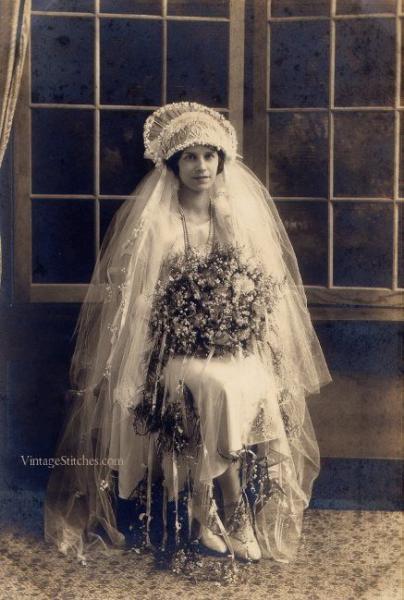
The veil was symbolic of a woman’s sub ordinance to a man. In ancient times, a woman would be shrouded from head to toe, and in ancient Greece the veil was yellow and in Rome red. The man lifting the veil was also a display of dominance. This ties into the tradition of the father giving the bride away. In times not so long ago, it was literally so, sometimes even in bartering or for business purposes. In very old times, brides were sometimes taken by means of capture. This brought forth two other traditions. The honeymoon originated when an unwilling woman was taken captive and hidden for thirty days, as the moon went through its phases, ample time for her relatives not to find her. During that time, the couple would drink a brew made from honey. Hence, the term "honeymoon" came to be. Also, when women were taken captive, the man did not want the spirits of her family to follow, so she was carried across the threshold of the home upon her first entrance, and the spirits could not enter with her.
The purpose of the bouquet has more than one origin. In more primitive wedding ceremonies, to ward off demons the bride carried garlands of herbs and spices that bore an intense odor. It has also been said that around the 1500s brides began to carry fragrant flowers on their wedding day to smell nice, as people seldom bathed then. Of course in modern times, brides carry flowers for decorative purposes, to add beauty and elegance to the ceremony.
The rice thrown at weddings was for good luck and prosperity. In Asia, the wish was "May you always have a full pantry." The wedding cake was initially a wish for fertility, as in early Rome, a thin loaf was broken over the bride's head. During the middle ages, the bride and groom would kiss over a small bunch of cakes, which later a baker thought to group the cakes together and frost them, thus creating the wedding cake that we are accustomed to seeing today.
Thanks again for you question David!
Jennifer Thompson,
Column Editor
- Log in to post comments