June Brown Legacy

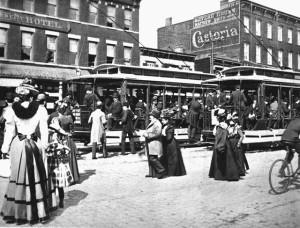
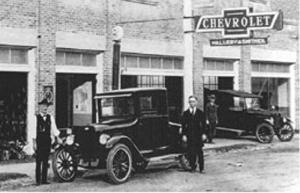
Photo of Chevrolet Dealership

Pearl Harbor hit the news. Life began to accelerate. When June was twelve the war was making an impact even in the vacation paradise of Florida's most famous beaches. Her father worked at a Chevy dealership, painting and striping the newest model cars. One of his duties in those years was masking off headlights so that only a thin strip of light would beam through. He also volunteered as an air raid warden.

The local population was determined not to become easy targets for the Germans. Along with controlling the amount of light emitted by their car headlights, they took care to close their window blinds at night.

Gas was being rationed. Churchgoers who couldn't afford the fuel to attend regular church held meetings in their homes. The community chipped in where it could toward the war effort. June remembers selling rubber for a penny a pound. This led to the catastrophe of her brother selling off her favorite rubber doll. When she found out she reamed him thoroughly. Since has never let her 5' 0" frame keep her from voicing her opinion in no uncertain terms.

It was funny. Pre-war, many Americans dreamed about moving to Florida to get away from it all; but during the war, many Floridians, including June's parents, looked to the central states for escape.

They figured that in the landlocked states they wouldn't have to deal with rumors of U-boats patrolling the waters at night and worry about their robotic crew members goose-stepping along the beaches and who might at any time detour to the local bakery.

THE WATERMELON KING

Nicolo Anthony Prato was born on October 14, 1927, in his grandfather's home in the Bronx. His father, Pasquale, often bragged that within minutes after giving birth, his wife, Agnes, would get out of bed, take the wrapped baby in her arms, and prepare a meal for the family. Philip, their first son, told his mother that he hoped the angels wouldn't take Nick the way they had taken his baby brother, Ralph. Agnes looked at her newest son and commented about the curls that were already forming in the baby's reddish brown hair.

Rats were one of the problems of raising chickens in the backyard of their Bronx home. And, as Nick often said, Bronx rats were nothing to mess with. Besides selling the eggs and manure from the chickens, Agnes worked in the garden, raised her two sons and also operated a sewing machine in a local factory. During lunch and breaks, Nick would be carried into the factory so she could nurse him. Pasquale sold vegetables and fruit from his truck. Before the holidays, Nick's dad piled his truck high with Christmas trees.

Often, while shoveling snow for the family or to earn money, Nick's bare hands would bleed. Gloves and new shoes were a luxury the family couldn't afford. Sometimes, when food was scarce, Nick and his brothers caught sparrows so their mom could add the birds to the spaghetti sauce. With three growing boys in the house, it took a lot of the little birds to make a decent meal for the family!

My Life and Travels: Through the Eyes of a Civil War Slave

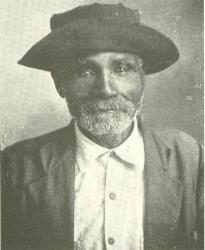
Photo of Levi Branham at age 70

I was born in 1852 in Murray County, Georgia. My first owner that I am able to recollect was Dr. Black.

One of my young masters was John Edmondson, another, Tom Polk Edmondson. I was Tom Polk's waitman until he went to the Civil War between the North and South. Bill, the youngest, was quite small. All of the waitmen and waitresses stayed in the Edmondson house now known as the Chief Vann house. The room in which we stayed had a fine carpet on which we slept. Mr. Edmondson gave us fine blankets and we surely did sleep warm and comfortable.

My old mistress, "Miss Beckie", was very good to us. She took more pains with us darkies than our parents did, simply because she had more to care for us with, and too, she loved us.

Legacy of Louis Tesio

Louis Tesio was born in New York on July 29, 1896. He had 2 younger brothers, Frank (AKA Frankie), John, and a sister, Nina. He was the oldest of his siblings. He grew up speaking Italian. His mother and father were from the Pimontese region of Italy (Torino).

One of the places they grew up in was the Bronx, NY. He followed in the footsteps of his father and became a musician. He owned a music store, Tesio Music, which his father had begun and gave lessons to the neighborhood children.

During the Great Depression, a man had come to him begging for work. But Louis had none to offer him, so he had him play at an event with other band members. He used resin on the bow of a violin, and the man "played" with the band, getting paid for his "work". My grandfather was known for acts of kindness like these.

Paul Revere and His Son

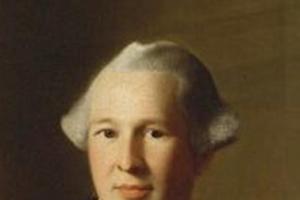
Image of Paul Revere

When they got closer to the river, with Charlestown on the other side, Paul Jr. could see a boat rocking with the tide. The two men that were with his father got into the boat and looked toward the man-of-war's masts outlined against the new moon. They motioned for Paul Sr. to get into the boat also, but he hesitated.

"The oars will be heard. We cannot risk that." he said.

The sound of his father's words excited Paul Jr. He wanted to help his patriotic father, so he ran back to the house where the girl had called out to him. He picked up a small pebble and threw it at her window to get her attention. When she came to the window, he whispered, "Toss me down a bit of soft cloth in the name of the Sons of Liberty-any type of cloth-for muffling my father's oars. He is bound for Charlestown in secret, and when I give it to him, I must go home."

The little girl tossed down her red homespun petticoat and the young patriot took it to his father where it helped muffle the oars on the boat that took Paul Revere to the Charlestown side of the river, so he could mount the saddled house which Deacon Larkin had sent for the "Midnight Ride of Paul Revere."

Pages